How long UAE businesses keep records, and when a scanned copy counts
5 min read
Most offices hold on to paper because nobody is sure how long they have to, or whether a scan would do instead. UAE tax law answers both questions in writing. This guide sets out what the published texts say, then covers the part we know best: scanning records so they stay readable for as long as you need them.
The short version: the general period in the Tax Procedures regulation is five years, real estate records seven, and the FTA says corporate tax records must be kept for at least seven years. Extra years apply during audits and disputes. The regulation allows records to be kept as photocopies or electronic copies if they match the original and can be produced readably on request.
What the law says about how long
Article 3 of Cabinet Decision No. 74 of 2023, the Executive Regulation of the Tax Procedures Law (Federal Decree-Law No. 28 of 2022), sets these periods "unless the Tax Law states otherwise":
Whose records
Period in Article 3
A Taxable Person
5 years following the tax period they relate to
Persons other than Taxable Persons
5 years from the end of the calendar year the document was created
Real estate records
7 years from the end of the calendar year the document was created
The same article adds extra periods:
4 more years, or until a dispute is finally settled if that is later, where there is a dispute with the FTA over tax obligations.
4 more years where the person is subject to an ongoing tax audit.
4 more years where the FTA gave notice of a tax audit before the normal period ran out.
1 more year from a voluntary disclosure made in the fifth year after the relevant tax period.
Corporate tax: seven years
For corporate tax, the Federal Tax Authority stated on 28 August 2025 that both Taxable Persons and Exempt Persons must keep the relevant records for at least seven years. That is the "Tax Law states otherwise" case: a business registered for both VAT and corporate tax will often plan around the longer period. Confirm which periods apply to your records with the FTA or your tax agent.
When a photocopy or scan counts
Article 4 of the same regulation says the record-keeping duty can be met either by keeping the original documents, or by keeping the information they contain, provided that:
the information is identical to the data in the original document, and available for the full retention period;
it is kept as a photocopy or electronic copy, and an easily readable copy can be produced if the FTA asks, within the time the FTA sets; and
it is kept in a way that allows the FTA to access it.
Article 4 also lets the FTA set further rules on how this information is kept, so check the FTA's current decisions before you change how you store records. Don't destroy originals on the strength of this article. Agree any change to your record-keeping with your tax agent or auditor first.
Scanning records so they stay usable
Those conditions all come down to a scan you can trust years later. That is a workflow question, and it is where most scanning projects go wrong.
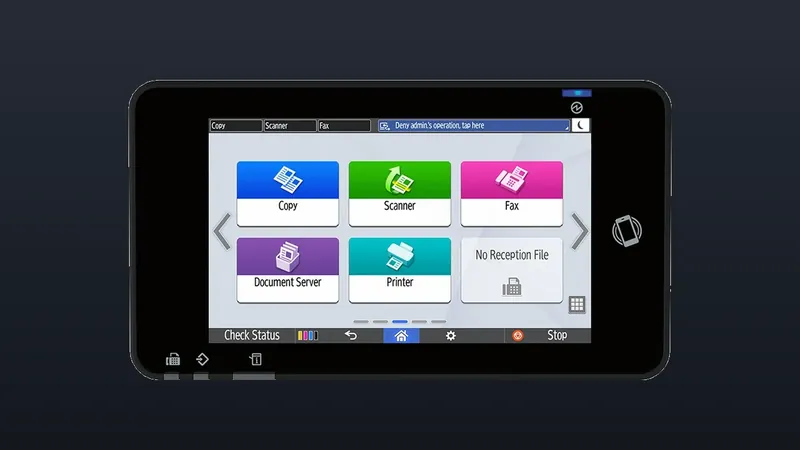
Scan to searchable PDF. Text you can search is far easier to produce on request than a folder of page images. Most current multifunction printers can do this; it is often a single setting. See the paper problem in UAE offices.
Check legibility at the scanner, not later. Faint thermal receipts, stamps and handwritten notes need a resolution and colour setting that keeps them readable. Test a sample of your hardest documents first.
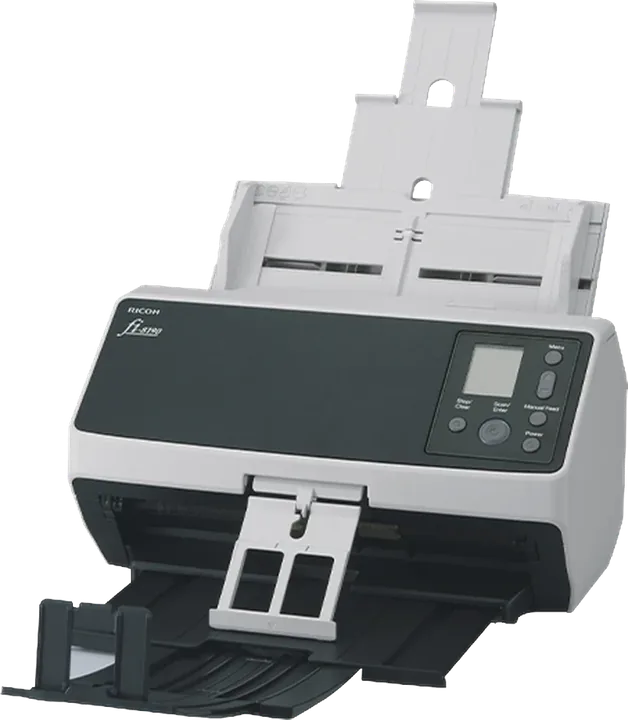
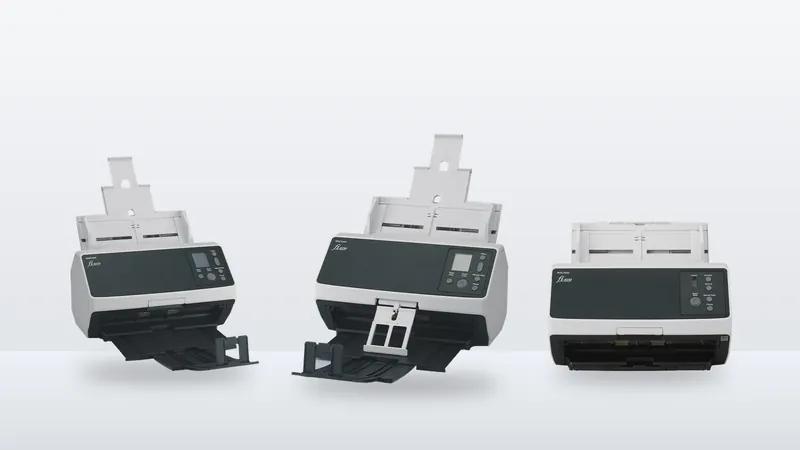
Don't lose pages. Double-fed sheets are the classic way a scan stops being identical to the original. Dedicated document scanners detect double feeds; see choosing a Ricoh fi document scanner.
Name and file for retrieval. Date, document type, counterparty and reference, in a folder structure by year, so the records for one tax period can be found together.
Record the retention end date. Keeping the tax period in the folder name makes it obvious when a year has passed its period.
Back up and control access. An electronic copy has to survive for the full period and be available when asked for. Keep copies in more than one place, and limit who can delete them.
Feeder reliability decides whether scanning holds: mixed sizes, staples and thin receipts are exactly the documents tax records are made of.
Where we can help
We don't advise on tax. We do help offices set up scanning that produces searchable, consistently named files, on the multifunction printers they already have or on a dedicated Ricoh fi scanner where the volume justifies it. See Managed Document Services or contact us.
This summarises published UAE legislation and Federal Tax Authority material as read on 4 November 2026. It is not tax or legal advice. Your obligations depend on your registrations, your business and any free zone or sector rules, and the law can change; confirm them with the FTA or a registered tax agent before you rely on them or destroy any record. This article is general information published by Gtech FZE and creates no obligation or professional relationship. Ricoh and Ricoh product names are trademarks of Ricoh Company, Ltd. To the extent permitted by UAE law, Gtech FZE accepts no liability for decisions taken on the basis of this article.
Questions
Frequently asked
How long must UAE businesses keep accounting records?
Cabinet Decision No. 74 of 2023 sets a general period of five years (seven for real estate records), unless the tax law states otherwise, with four extra years during audits or disputes. For corporate tax, the FTA has said records must be kept for at least seven years. Confirm the periods for your records with the FTA or a tax agent.
Can I keep scanned copies instead of paper originals in the UAE?
Article 4 of Cabinet Decision No. 74 of 2023 allows records to be kept as photocopies or electronic copies, provided the information is identical to the original, available for the whole period, readable copies can be produced when the FTA asks, and the FTA can access it. The FTA can set further rules, so agree any change with your tax agent before destroying originals.
What makes a scanned record reliable?
A searchable PDF, legible at the resolution used, with no missing or double-fed pages, named and filed so a tax period's records can be found together, and backed up for the full retention period.
Talk to us
Want this applied to your own setup?
We are an authorized Ricoh distributor holding stock at Jebel Ali, supporting installations across the UAE and exporting into the wider region. Tell us your volumes and we will tell you what fits.
UAE offices are about to have machine-readable invoices sitting alongside delivery notes in a lever-arch file. That mismatch is the actual problem, and it is not solved by better accounting software.
Daily volume, feeder size, flatbed or not, and how the scans reach your systems. How to pick the right Ricoh fi scanner (formerly sold as Fujitsu) for an office, a department or a scanning bureau in the UAE.
Scans, print jobs, address books and logs can sit on a multifunction printer's drive. What is stored, the security features to ask for, and what to do before a machine is returned, replaced or sold.

 Authorized